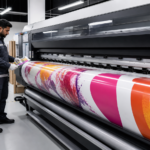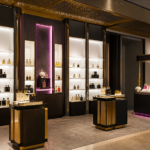
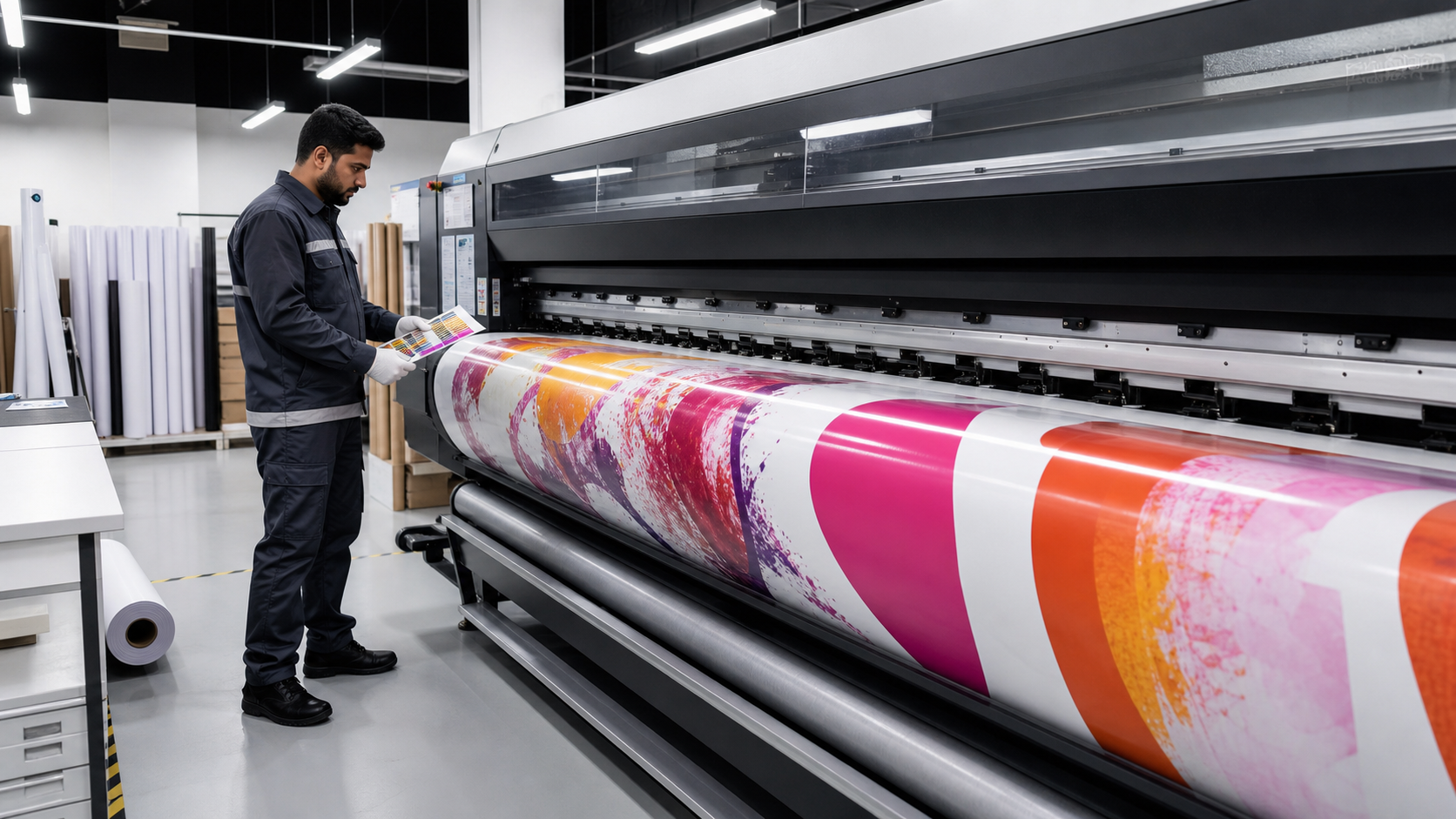
Large-format print can turn a blank wall, shopfront, event space or construction hoarding into a powerful brand surface. The visual idea is important, but the material and production method determine how well the result performs after installation.
In Qatar, the difference between indoor and outdoor conditions is especially important. Heat, UV exposure, dust, wind and frequent cleaning can shorten the life of a graphic that was specified only for appearance.
Begin with location and viewing distance
The first question is not “Which printer should we use?” but “Where will the graphic be seen?” A mall wall graphic viewed from two metres needs different image detail and finishing from a building banner seen across a road. The mounting surface, lighting, expected lifespan and replacement plan all influence the specification.
- Short-term indoor: launches, promotions, exhibitions and seasonal retail campaigns.
- Long-term indoor: office branding, wayfinding, permanent retail graphics and wall features.
- Short-term outdoor: event fencing, temporary banners and campaign rollouts.
- Long-term outdoor: shopfronts, building graphics and durable directional signage.
Vinyl graphics for flexible applications
Self-adhesive vinyl is widely used for windows, walls, panels, vehicles and smooth display surfaces. Options include opaque, transparent, frosted, removable and high-tack films. A protective laminate can improve resistance to abrasion, cleaning and sunlight.
Surface preparation is critical. Dust, moisture, uneven paint or a low-energy plastic can cause lifting even when the print itself is excellent. A site inspection and small adhesion test are sensible for unusual surfaces.
Banners, mesh and fabric
PVC banner is suitable for many temporary indoor and outdoor applications. For large exposed areas, mesh can reduce wind load because air passes through the material. Fabric graphics provide a softer, premium appearance for exhibitions, lightboxes and interiors, with options designed for backlit or front-lit display.
Finishing matters as much as printing. Reinforced edges, eyelets, pockets, silicone edging and tension systems should be selected for the installation method.
Rigid boards and display panels
Foam board, PVC sheet, acrylic, aluminium composite and other rigid materials can be printed directly or finished with applied vinyl. Lightweight boards suit temporary indoor displays, while stronger weather-resistant substrates are better for long-term or outdoor use. Thickness, edge treatment and support spacing affect how flat and professional the panel appears.
Colour, resolution and proofing
Large graphics do not always need extremely high resolution, because viewing distance changes how detail is perceived. Files should still be prepared at the correct scale with suitable bleed, fonts and colour profiles. Critical brand colours deserve a physical proof, since screens cannot accurately predict every ink-and-material combination.
Installation completes the job
A well-printed graphic can still fail if seams are poorly planned or the surface is not prepared. Professional installers consider alignment, expansion, tension, safe access and removal from the start. For outdoor work, the fixing system must also suit the site and expected wind exposure.
Choose a specification, not just a print
The best large-format solution balances appearance, lifespan, location and budget. Spot Media helps brands in Qatar select materials, prepare artwork, produce graphics and manage installation as one coordinated service. Bring us the site dimensions, photographs and campaign timeline, and we can recommend a practical production route.